
A known coaching idea, in our own words. We do not invent quotes and put a celebrity’s name on them.
The question in “Feel the muscle with a light load before you add weight” is where attention belongs in a set. The useful answer is narrow. On a light isolation lift or a machine, feel the muscle you mean to train, then add load only while that feeling and the path still agree. On a squat, a press, or a row, the path comes first. Feeling is a tool. It is not a replacement for progressive overload, and it is not a reason to ignore where the bar goes.
Internal focus means the cue is the muscle. External focus means the cue is the outcome: the bar’s path, the pad, a clean rep. Both can be honest. They are not interchangeable at every load.
What the focus trials measured
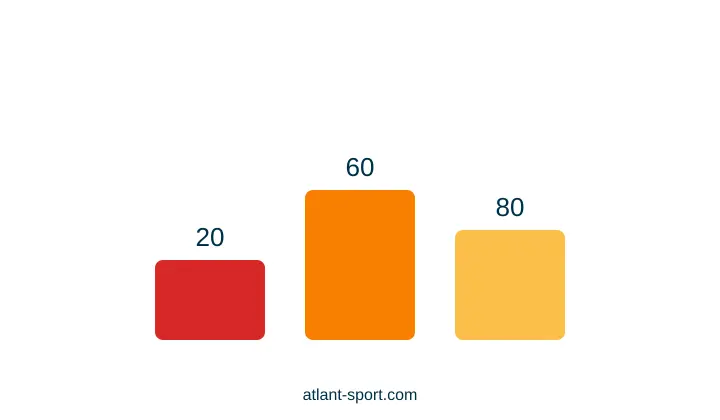
Calatayud and colleagues, in the European Journal of Applied Physiology in 2016, tested 18 trained men on the bench press. They pressed at 20, 40, 50, 60 and 80 percent of one-repetition maximum, either as a normal set or while trying to use the pectoralis or the triceps on purpose. Surface EMG rose in the muscle they were asked to use, at loads from 20 to 60 percent. At 80 percent the selective rise was gone. The authors described a threshold between 60 and 80 percent, not a smooth fade. The extra activity did not come from switching the other muscle off. A cue can steer a moderate bench. It does not rewrite a heavy one.
Schoenfeld and colleagues, in the European Journal of Sport Science in 2018, followed 30 untrained men for eight weeks, three days a week. Both groups did four sets of eight to twelve on a barbell curl and a machine leg extension. One group was told to contract the target muscle. The other was told to move the load. Elbow-flexor thickness rose 12.4 percent with the internal cue and 6.9 percent with the external cue. Quadriceps thickness did not show that split. Strength differences did not reach significance. The trial did not ask anyone to aim the cue at the elbow versus the forearm, and it did not separate biceps from brachialis. What it supports is smaller: on a curl, attending to the contraction lined up with more growth in the elbow flexors as a group. On the thigh machine, the same trick did not buy a clear extra.
Neither paper retires adding weight. Calatayud’s effect faded as the load climbed, and Schoenfeld’s groups still trained in a repetition range. Feel the muscle on a light set, then add a clean rep before a heavier load. A cue that shortens the path so you “feel it more” has left the finding behind.
Three ways to aim attention
| Option | What you do | What it rests on | Where it fails |
|---|---|---|---|
| Feel it light, then load | On a curl or a machine, find the muscle at a modest load, then add weight only while the path holds | Calatayud: selective EMG at 20 to 60 percent, not at 80. Schoenfeld: thicker elbow flexors with an internal cue on curls | If “feel” becomes a reason to stay light forever, overload never starts |
| Watch the path on compounds | Squat, press and row to a clean line, and let the muscles follow the line | The thigh result in Schoenfeld did not split. A heavy bench in Calatayud did not select | Staring into one muscle and losing the bar path is the failure, not the method |
| Feel instead of progress | Chase a burn at a tiny load and call that the whole program | A misreading of both trials | The 2018 groups still did sets of eight to twelve. Feeling was not the progression |
Use the first row on isolation and machines. Use the second on lifts that move you through space. Retire the third.
What to do instead, and when the idea fails
Start the isolation exercise light enough that you can name the muscle. Then do the work sets. If they are still in the band where Calatayud saw a difference, a quiet cue is fair. When the load is high enough that the cue disappears, stop asking for it and finish on the path. Next session, add a rep before you add weight. The feeling is how you learn the exercise. The log is how you know it changed.
The idea fails on a lift whose job is the path. A squat you “feel in the glute” while the knee caves is a worse squat. Sharp joint pain is a stop, not a connection. It fails when months of progress are only a better burn at the same tiny load: Schoenfeld’s internal group still had a repetition target. EMG, or a few weeks of thickness in untrained men, does not replace food, sleep, and the sets you skipped.
The published plans keep the path in front. Six bodyweight chest steps include a palm press so you can feel the chest, then return to reps you can count. Taking a bench station is about the setup, not a private sensation. Press, row and squat progresses by filling the rep range.